Pregnancy brings joy, but also challenges such as back pain. Sitting and standing at the office or at home, in particular, puts strain on the back. In this article, you'll learn how to strengthen your back and alleviate back pain with simple exercises and tips to make your pregnancy as comfortable as possible.
My back aches, my belly bulges forward, and sitting or standing for long periods is difficult. Pregnancy – a time full of anticipation, but also full of physical changes that don't always make your heart flutter, but are sometimes truly unpleasant and challenging.
Back pain is among the most common complaints experienced by expectant mothers. According to studies, over 60 percent of pregnant women are affected by back problems.
These pains can be particularly bothersome for women who spend a lot of time sitting or standing during pregnancy, whether in the office or working from home. The pain occurs primarily in the lower back, specifically in the lumbar region, sacrum, or pelvic floor. Does this sound familiar?
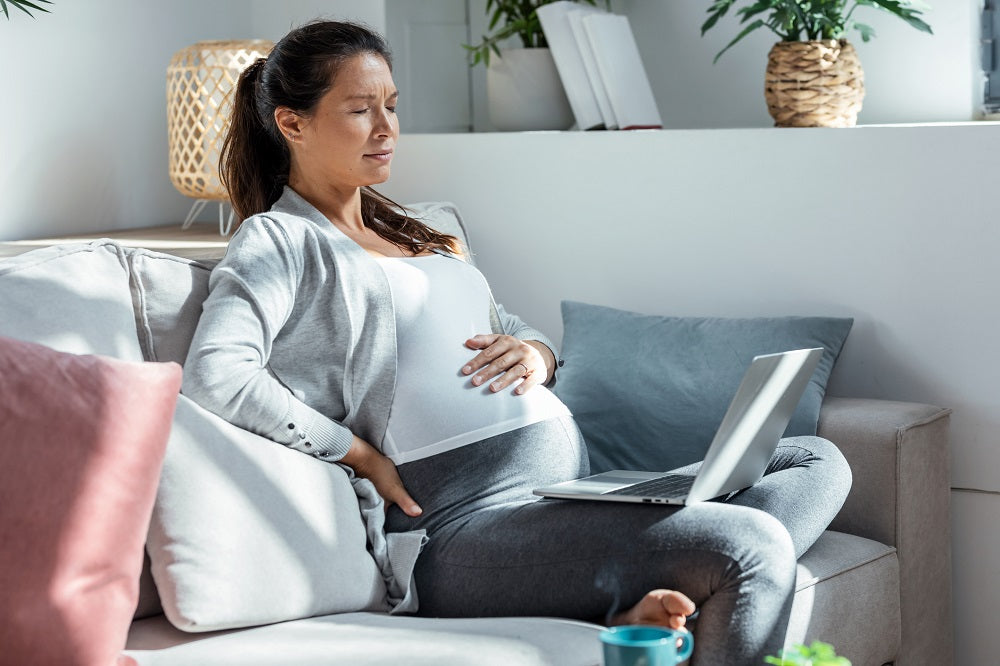 Prolonged sitting in the office or at home is particularly stressful for pregnant women.
The good news is that there are ways to prevent or at least alleviate pregnancy-related back pain. We'll give you practical tips on how to strengthen your back, especially while sitting and standing in everyday life or at the office, so that your pregnancy is as comfortable as possible.
What exactly causes back pain in expectant mothers?
Back pain due to hormonal changes
Hormonal changes play a crucial role, among other factors. The increased release of the hormones relaxin and progesterone causes the joints, ligaments, and muscles to become softer and more elastic, allowing the pelvis to expand and provide sufficient space for the baby. This can lead to a loss of pelvic stability and potentially cause pelvic floor pain.
However, the ligaments and tissue become less flexible not only in the pelvic floor area, but also along the spine. This weakens the spine's support structure, which, combined with the additional physical strain, can cause back pain.
Poor posture can cause pain
As the belly grows, the body's center of gravity shifts forward, causing many women to develop an exaggerated lordosis (swayback). This poor posture leads to muscle tension and back pain.
Weight gain as a trigger for pain
And then there's the extra weight. Back pain is particularly common in the last trimester of pregnancy because, with increasing weight, the expectant mother's mobility becomes more and more restricted. The bones and joints have to bear the additional weight, and the strain on the back muscles is high.
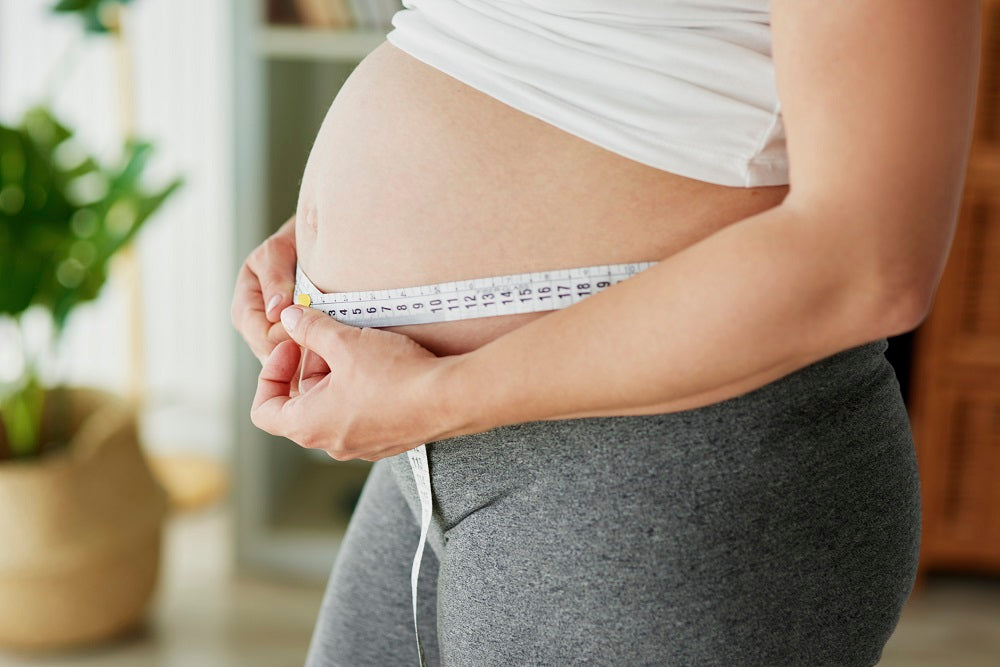 As their bellies grow, many pregnant women develop an arched back. This poor posture causes back pain.
 When the sciatic nerve is pressing
If you experience sharp pains during pregnancy, it could be a pinched nerve. The sciatic nerve, in particular, causes problems for many pregnant women. It runs from the lumbar spine down through the gluteal muscles and thigh to the foot.
If the sharp pain persists for an extended period, you should definitely consult your doctor.
And how can I keep the back pain under control?
Exercise is extremely important during pregnancy, even though it becomes increasingly difficult as the pregnancy progresses. There is a particular risk of becoming lethargic while working in an office.
Here we show you how to stay active in the office or home office, strengthen your back and relieve pressure on your pelvic floor.
 With a height-adjustable desk like the Aeris Active Desk, you can regularly switch between standing and sitting.
 Active, back-friendly standing:
- Ideally, your workspace would be equipped with a height-adjustable desk , such as the Aeris Active Desk , which allows you to alternate between standing and sitting. This way, you can activate different muscle groups and avoid strain.
- Stand with your feet slightly wider apart than usual to distribute your weight evenly.
- Don't straighten your knees when standing, but bend them slightly.
- Maintain a neutral pelvic position and avoid arching your back. Tilt your navel upwards to achieve this. Lift your chest and keep your shoulders from slumping forward.
- To make standing even more comfortable, you can also use an active standing mat, such as the Aeris Muvmat .
The topographic 3D structure of the standing mat activates your foot reflex zones, relaxes your muscles, and keeps your body moving, just like walking on a forest floor. You can use the active standing mat with shoes or barefoot. Besides the office, the standing mat is also a great companion at home—simply anywhere you have to stand for extended periods.
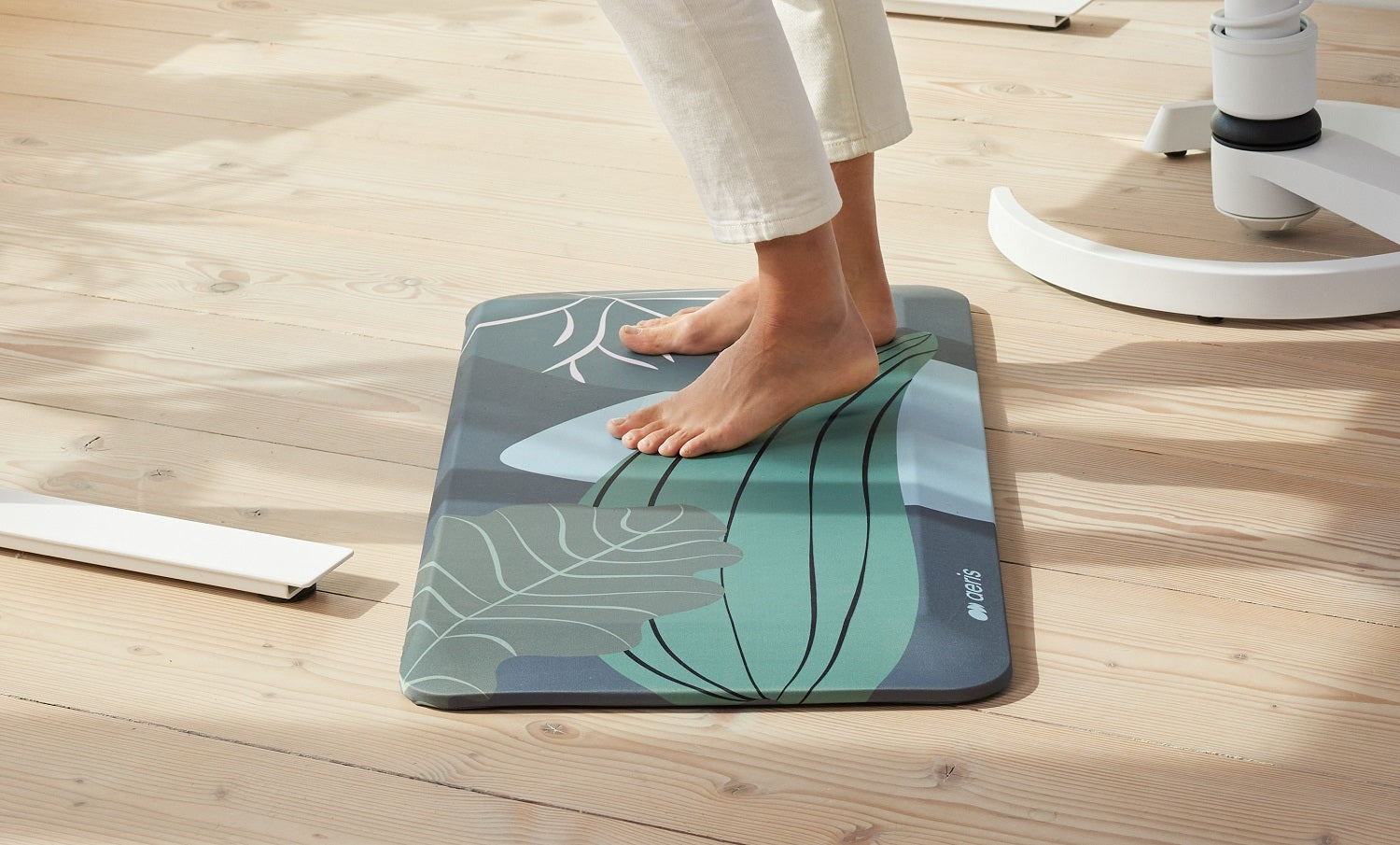 The Aeris Muvmat makes standing for long periods more comfortable for pregnant women.
Active, back-friendly sitting:
If you don't already have a height-adjustable, ergonomic office chair , now's the time to get one. While you can't force your employer to provide one, it doesn't hurt to ask.
At Aeris, we've developed ergonomic office chairs that offer you freedom of movement in all three dimensions while sitting. That is, forward and backward, left and right, and up and down.
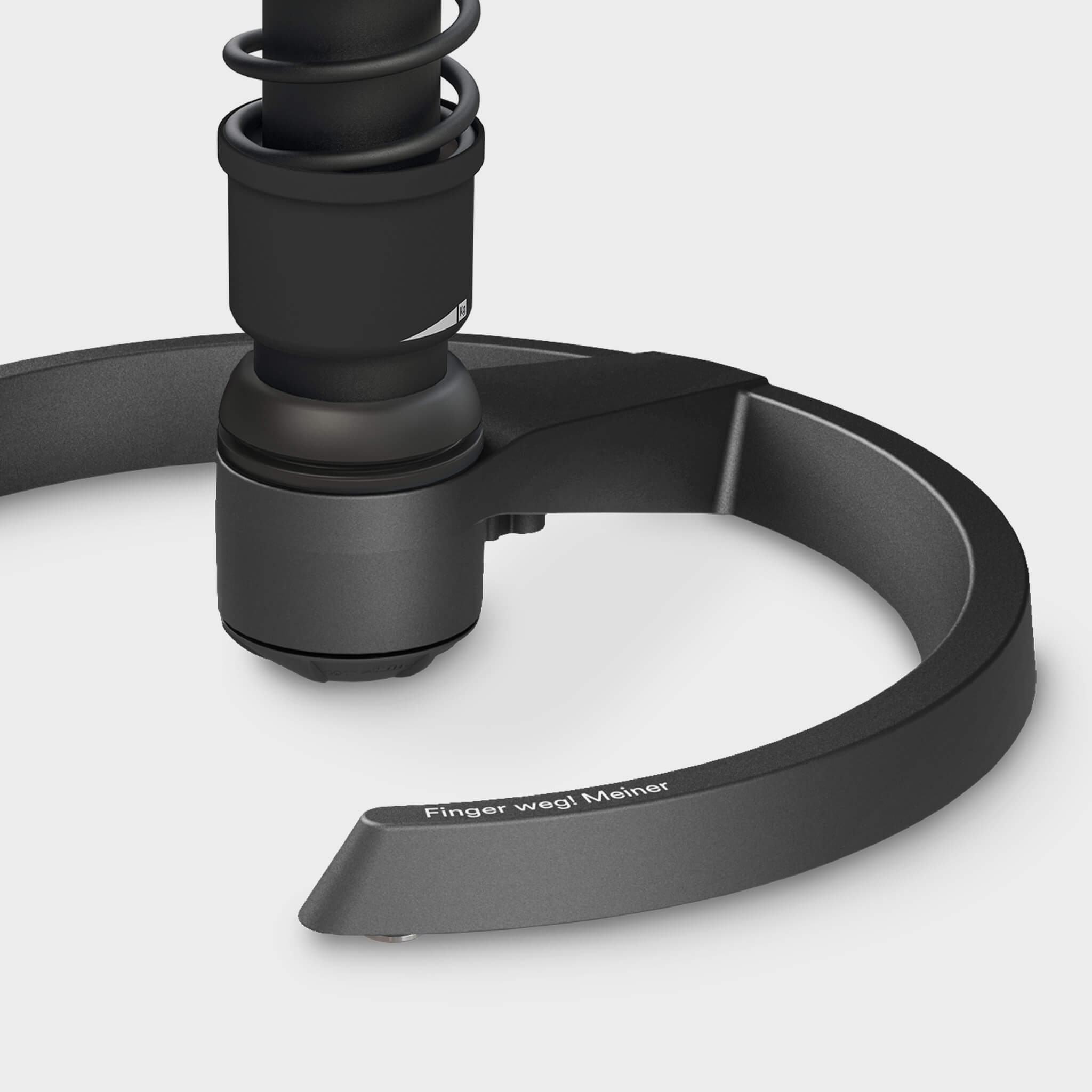
These chairs, like the Aeris Swopper, are not only fun to use, but also exceptionally gentle on the pelvic floor. You're constantly encouraged to maintain a healthy upright posture, which is helpful if you tend to slouch during extended periods of sitting. The free movement from side to side and forward and backward automatically relieves pressure on the pelvis, hips, and of course, the back.
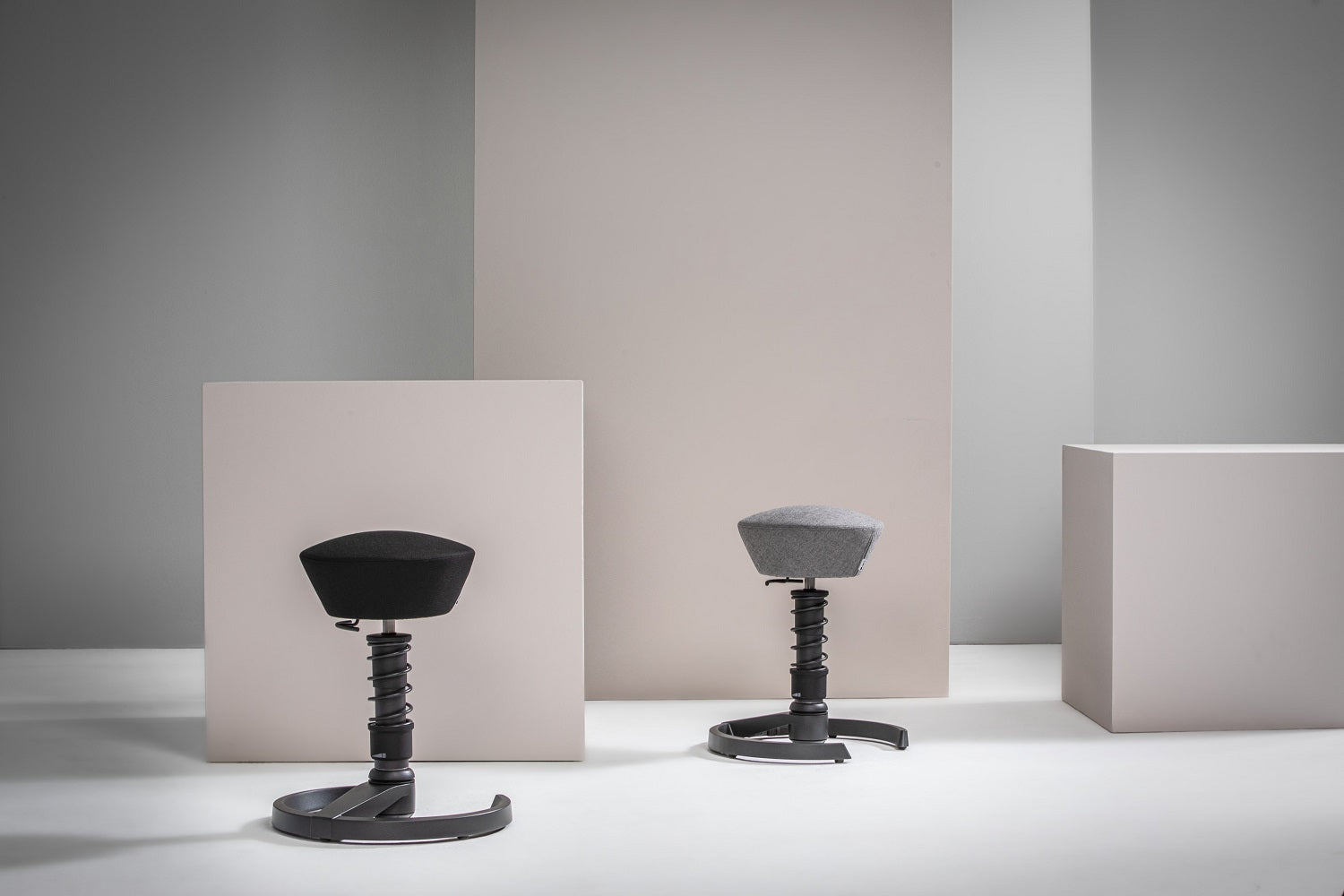 The Aeris Swopper strengthens the back through free movements in all directions.
Sitting on the Aeris Swopper promotes mobility, especially in the lower lumbar spine (LWS) and the sacroiliac joint (SIJ) area, and also engages the muscles that stabilize this area.
This stabilization is especially important during pregnancy. The weight of the baby and the protruding belly puts particular strain on the lumbar spine and sacroiliac joint region.
The bouncing ability of the Aeris Swopper , i.e. the up and down movement that gently cushions the body when sitting down and supports it when standing up, is very pleasant during pregnancy.
Furthermore, it is the special tilting capability of the chair that makes it particularly easy for pregnant women to first shift their weight forward when getting up and then rise when the tip of their nose is slightly in front of their belly.
Tip: The Aeris Swopper is also extremely helpful during breastfeeding and rocking. The gentle rocking motion on the chair soothes both mother and child, which has a positive effect on the entire breastfeeding experience. And if newborns have digestive issues, the "swopping" motion is also very beneficial. The up-and-down rocking action stimulates the baby's bowel movements and helps them get through this phase more easily.
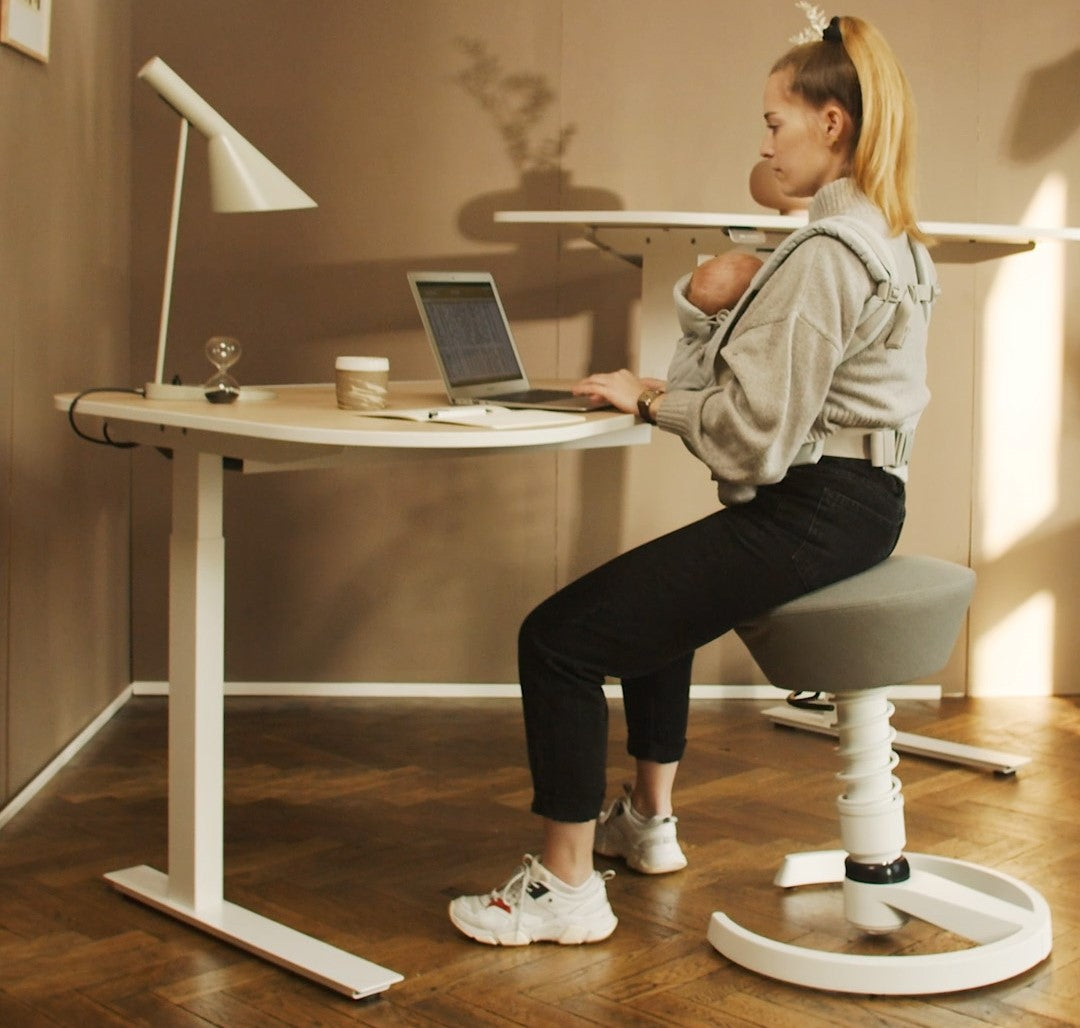 The rocking motion on the Aeris Swopper has a calming effect on both mother and child.