Which costs for purchasing an office chair and other work equipment for your home office can you deduct from your taxes? Who bears the costs, and is there any government support for home offices? The most important points. Home Office tax tips at a glance.
Even before the Corona pandemic, Home office and mobile working have played a role in many companies. However, this has changed significantly since the pandemic and the temporary measures it temporarily implemented. The obligation to work from home (since July 1, 2021, there has been no obligation to work from home in Germany) is also clear to everyone else: Working in the Working from home has become indispensable. However, especially if you work from home a lot, you absolutely need good office equipment.
An ergonomic office chair , for example, should be a must. A makeshift setup using a kitchen table and chair is very unhealthy in the long run, and concentrated work is impossible. When it comes to a home office, many employees inevitably ask themselves: How can I deduct my home office expenses for tax purposes? We'll explain it to you.
Deducting office chairs from your taxes – the most important points at a glance
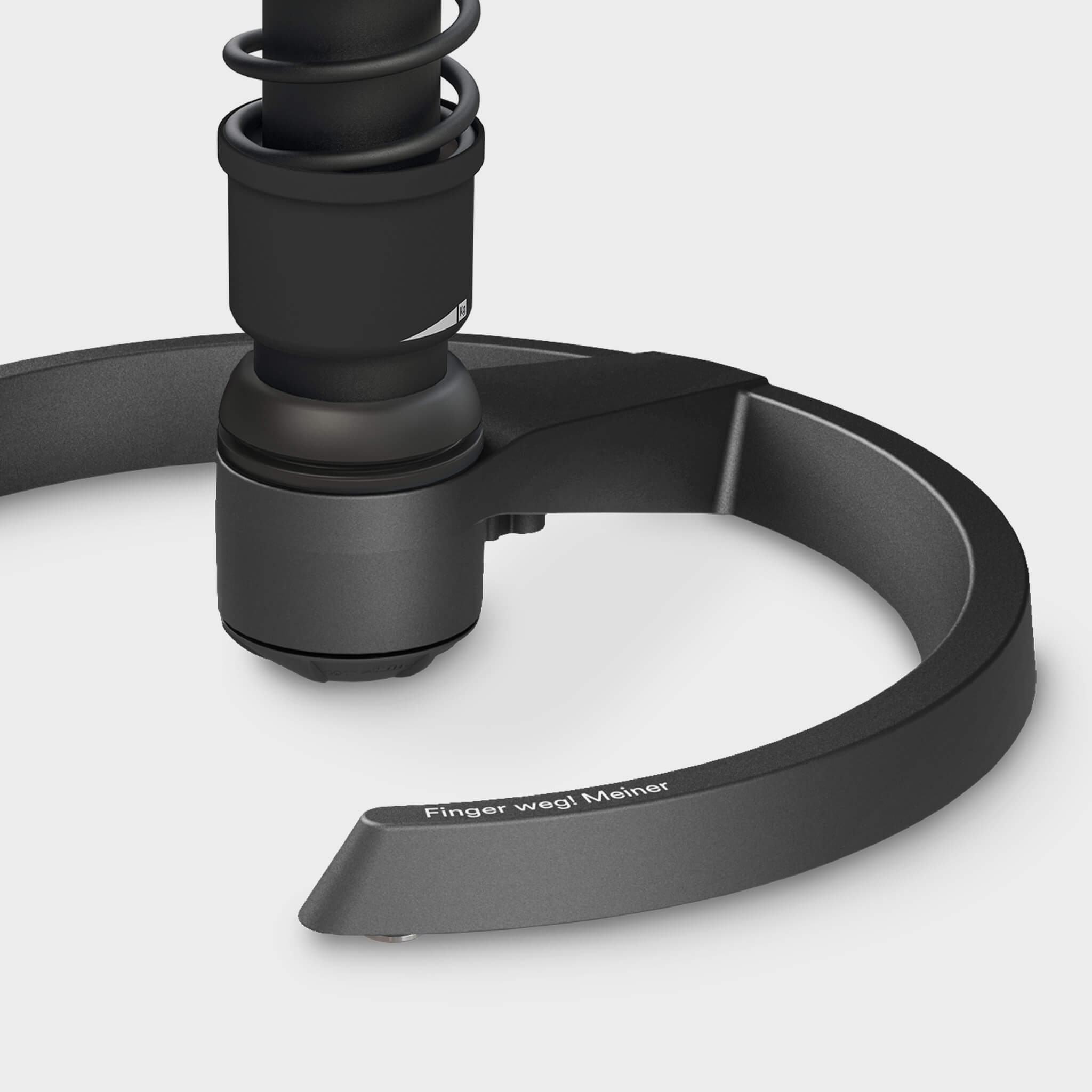
An ergonomic office chair like the Aeris Swopper is not only good for your back, but also tax-deductible. If the net price is under €800, you can immediately deduct the cost as a low-value asset; more expensive models are depreciated over 13 years. Employees declare the expenses in Schedule N under "Work Equipment," while self-employed individuals do so in their income statement. Important: Keep your receipts and check whether the business expenses exceed the standard allowance of €1,000.
Home office tax tips for employees
1. Purchase of an office chair by the employer
First of all: This is the best and most cost-effective option for you. If your employer provides you with an office chair (preferably an ergonomic one) for your home office, you are allowed to use it for both work and personal purposes. This equipment for your home office is tax-free. This means you don't have to declare the office chair as a benefit in kind from your employer to the tax office and pay taxes on it.
2. Agreement on a flat-rate home office expense allowance with the employer
Your employer can also subsidize your home office setup with a grant of up to €1,500. This home office allowance also covers, for example, the use of your private telephone and internet connection. This means you can, of course, also use this allowance to purchase office furniture. To clarify the home office arrangements with your employer, either contact the relevant people in the HR department directly or get in touch with your department head first.
3. Home office allowance as business expenses in the tax return
To provide tax relief for employees, the German Federal Government introduced the so-called home office allowance as part of the 2020 Annual Tax Act. This home office allowance stipulates the following:
- Employees who work from their home office receive a flat rate of 6 euros per day, up to a maximum of 1,260 euros per year.
- The daily flat rate does not matter whether your boss has ordered you to work from home or whether you are working from home voluntarily.
- The flat rate only applies if you worked exclusively from home that day. If you were in the office for an appointment, for example, that day cannot be claimed under the home office allowance.
- The home office allowance is considered a business expense and must therefore be declared in the tax return.
- Initially, the new home office allowance was limited to 2020 and 2021. It has since been made permanent and remains in effect.
- Employees can deduct not only the home office allowance but also costs for work equipment (e.g., PC, printer, desk) and home telephone and internet expenses as business expenses. Up to 20% of the telephone and internet bill, but no more than €20 per month, can be claimed, provided the employer does not reimburse these costs.

You can deduct the cost of your home office equipment – for example, your office chair – from your taxes.
Important: For working from home to have a positive impact on your tax return, your total work-related expenses must exceed the annual flat-rate allowance of €1,000. This amount can be claimed as a flat-rate allowance on your tax return even if you haven't actually incurred any work-related expenses.
Therefore, investing in an ergonomic office chair for your home office is doubly worthwhile. Firstly, it's good for your health – your back will thank you – and secondly, it's tax-deductible. If you buy the office chair for your home office yourself, you can claim it as a business expense. This is also possible if you don't have a dedicated office, but only a workspace or similar.
An office chair is considered a low-value asset. The acquisition cost for a low-value asset is €800 net. Therefore, an office chair with a purchase price of up to €800 net can be fully deducted in the year of purchase.
Here's what you absolutely must pay attention to: If the office furniture costs more than €800 net, you must spread the cost over its expected useful life. This is generally 13 years, the officially stipulated lifespan for office furniture. Furthermore, if you use the office chair for private purposes for more than 10 percent of its total useful life, you can only deduct a portion of the cost from your taxes.
Of course, other costs such as rent, electricity, and heating for a home office can still be claimed as tax deductions on a pro-rata basis. Work equipment has also always been generally deductible and can be included in the tax return.

It is important that when purchasing your office chair, you make sure that it costs less than 800 euros - like the Aeris Swopper shown here - so that you can deduct the costs for tax purposes all at once.
4. Declaring expenses as extraordinary expenses in the tax return
Another way to claim the expense of an ergonomic office chair on your tax return is through the so-called "extraordinary expense." This applies when there are medical reasons for using a healthy, ergonomic active office chair. This is the case, for example, if you have undergone surgery or an accident, or as a measure following a herniated disc or similar condition.
However, this requires exceeding the reasonableness threshold according to Section 33 of the German Income Tax Act (EStG). For single individuals without children, this threshold is five percent of total income for incomes up to €15,340. In this case, expenses exceeding €767 per year are therefore tax-deductible.
Documentation is important – collect evidence.
As with all tax matters, when it comes to working from home, it's advisable to carefully keep all receipts for purchases. You should also document your workspace setup with photos taken on different days and at different times. A certificate from your employer confirming the mandatory home office arrangements during the COVID-19 pandemic (ideally including the date and number of hours worked) can also be very helpful.
Home office tax tips for freelancers and the self-employed
Even before the pandemic, freelancers and the self-employed were subject to a regulation allowing them to deduct purchases such as office chairs and desks. Since 2018, new office equipment with a net purchase price of up to €800 can be fully deducted from taxes in the year of purchase.
However, if the purchase price exceeds 800 euros, the acquisition no longer falls under the threshold for low-value assets (GWG) and, according to the depreciation table of the Federal Ministry of Finance, must be depreciated as office furniture over 13 years.
Home office tax tips for companies
The same applies to companies: If the acquisition costs for an office chair amount to up to 800 euros, an immediate deduction as business expenses can be made under the regulation for low-value assets according to § 6 para. 2 EStG.
A further tax advantage arises when the expenses for a larger number of office furniture items with acquisition costs between €250 and €1,000 are combined. In this case, a so-called pooling solution is possible: Businesses can bundle the aforementioned assets into a single collective item and depreciate them over five years.
Specifically, this means that a company that now buys 20 high-quality office chairs worth 800 euros each can deduct 16,000 euros for tax purposes this year – or 3,200 euros per year for five years.
Good to know: This way, despite the Corona crisis, you can kill two birds with one stone. Business owners invest in the health and productivity of their employees with back-supporting and movement-promoting office chairs, while simultaneously reducing their tax burden.
Home office costs: More financial support from employers and the government is desired.
In addition to the tax deductibility of the workplace in one's own home, the question of subsidies from employers and the state for the home office also arises repeatedly.
According to a 2020 Aeris home office study with 2,000 respondents, more than a third of employees expect both their employer and the state to contribute more to the costs of a home office workplace.
But why is more government funding necessary? Already, two-thirds of those surveyed complain of health problems while working from home and have therefore already invested in items such as an ergonomic office chair or a height-adjustable desk, even at their own expense.

Over 35 percent of those surveyed would like more financial support from the government and employers regarding home office equipment.
Even now, many employees working from home have to improvise. For many, the kitchen or dining room table becomes a desk, and the kitchen chair a makeshift office chair. This situation could be improved with a government subsidy for the purchase of ergonomically correct office furniture. According to the Aeris study, 54 percent of respondents reported that their home office furniture is significantly worse than it was in the office. The result: health problems such as back pain, tension in the neck and shoulders, and headaches.
Only 18 percent of those surveyed had their home office fully equipped by their employer, while 27 percent received partial reimbursement from their employer. However, 20 percent bear the costs of furniture and technology for their home office themselves. 37 percent of study participants expect more financial support from their company for furnishing their home office. And 35 percent of respondents also believe the federal government has a responsibility to contribute to the costs of working from home due to the pandemic, for example, through further tax benefits.
Government funding “go-digital” for SMEs
The government is not entirely inactive when it comes to promoting home offices. For example, with the "go digital" funding program, the federal government supports small and medium-sized enterprises (SMEs) and craft businesses in setting up digital infrastructure for home office workstations. Up to 50 percent of the costs can be covered.
Further information about the “go digital” funding program and where you can apply for funding can be found here.
The Federal Office for Economic Affairs and Export Control (BAFA) is also currently offering a funding program: the BAFA Corona Consulting program. A BAFA-funded business consultant supports companies in adapting digitally to the new working environment of home offices, as well as in further business planning. Companies that have run into difficulties due to the coronavirus pandemic are eligible for BAFA funding to set up home office workstations. The consulting services are subsidized up to a maximum of €2,700.
Further information about the BAFA funding program and the application process can be found here.
Disclaimer: Please note that we are not authorized to provide tax or legal advice, and this information does not constitute tax or legal advice. It is merely general information about the products we offer, which must be adapted to the specific circumstances of each individual case and evaluated from a tax and legal perspective. Please seek advice tailored to your individual situation from your tax or legal advisor before making any decisions regarding issues arising in connection with our products. No liability is assumed.