What are ligaments and tendons?
Ligaments and tendons enable us to hold and move our bodies. Together with bones, muscles, and joints, they form the human musculoskeletal system. Sitting, squatting, lying down, or stretching – without ligaments and tendons, we would be unable to move. Ligaments connect bones and stabilize joints. They consist of strong, fibrous connective tissue and contribute significantly to the control and limitation of movement. Tendons connect muscles to bones and transmit the force of the muscles to enable movement. They are more elastic than ligaments and play a crucial role in the dynamics of the musculoskeletal system.
How many ligaments and tendons does a human actually have?
The human body has approximately 900 ligaments and over 4000 tendons . The exact number can vary slightly from person to person, depending on anatomical features or anomalies.
What is the difference between tendons and ligaments?
To allow joints to move smoothly and without rubbing against each other, the joint bones are protected by a layer of cartilage. However, excessive stress, for example due to being overweight, engaging in sports, or even misalignment, can lead to cartilage wear and tear. The cartilage layer becomes increasingly thin until it almost completely disappears. This leaves the bone ends unprotected, causing significant pain. The bone structure in the joint area changes, and movement becomes painful. In some cases, this wear and tear and deformation can even lead to joint stiffness.
Osteoarthritis often develops gradually without the affected person consciously noticing. The degenerative processes in the joints don't always lead to immediate pain. Initial symptoms can include, for example, difficulty getting up or discomfort while sitting.
How do tendons work?
Tendons consist of collagenous connective tissue fibers running side by side and firmly connected to one another, bundled together – similar to a rope. Contrary to popular belief, however, they are not rigid, but rather ten to fifteen percent elastic in their tissue structure. When unloaded, they run in a slightly wavy pattern, thus acting like a spring to cushion the transmission of force to the bone.
To transmit muscle power to our otherwise rigid skeleton and set it in motion, tendons are fused to muscle fibers on one side and attach to bones on the other. In some places – such as our wrist – they run at an angle over bony prominences and are subjected to high tension. To reduce excessive friction between tendon and bone during movement, they are protected by tendon sheaths, the fluid in which acts like a lubricant.
When we move, our muscles contract first. This tension is then transmitted to the tendons, which – similar to the strings of a marionette – transfer the movement to the bones. As a result, we can, for example, lift our leg or clench our hand into a fist.
How do conveyor belts work?
While tendons act as force transmitters, enabling our movement in the first place, ligaments are responsible for stabilizing and supporting our joints. Ligaments are connective tissue connections between two bones and consist primarily of collagen. They are generally not very elastic, which is why they can be easily overstretched and then become slack or even tear completely. However, they must be relatively inflexible because ligaments stabilize our joints both internally and externally, restricting their movement to a functionally appropriate level. In this way, they protect against overstretching of muscles and tendons.
Tendon and ligament pain
Ligament injuries can occur during sports as well as in everyday life and primarily result from rapid (twisting) movements. If ligaments are stretched beyond their natural range, for example, when you twist your ankle, they can be damaged. Typical sports injuries include ligament sprains and tears. If left untreated, a ligament injury can have serious consequences: the joints can remain unstable for a long time, and further injuries or damage can occur.
Tendon injuries are often identical to a tendon rupture. You might cut yourself on a knife or a sharp piece of glass and accidentally sever the tendon. However, a sudden and excessive stretching of the tendon is also a common cause, leading to a tear. This so-called tendon rupture can occur, for example, during ball sports. If the tendon is completely torn, the connection between the muscle and the bone is also destroyed, and movement is impaired – surgery is then often unavoidable.
Tendonitis, on the other hand, is less drastic. If a tendon is subjected to one-sided or excessive strain over a prolonged period, it can become painfully inflamed. Often, the origin or insertion points of the tendons are affected, causing pain with every movement. Tendonitis in the wrist is a typical "office ailment."
Sedentary work combined with lack of exercise or one-sided strain/overuse often leads to weak points that are frequently underestimated for extended periods. One possible consequence: Overstretched ligaments and shortened tendons, along with tense muscles, can often cause back pain.
What can you do in everyday life to benefit your ligaments and tendons?
Besides regular exercise, there's a lot you can do for your body, and therefore for your ligaments and tendons, in your everyday office life. Avoiding poor posture or varying your sitting position helps strengthen muscles, stabilize joints, and thus relieve strain on ligaments. Training your balance and coordination is also recommended to improve the interplay between muscles and movement.
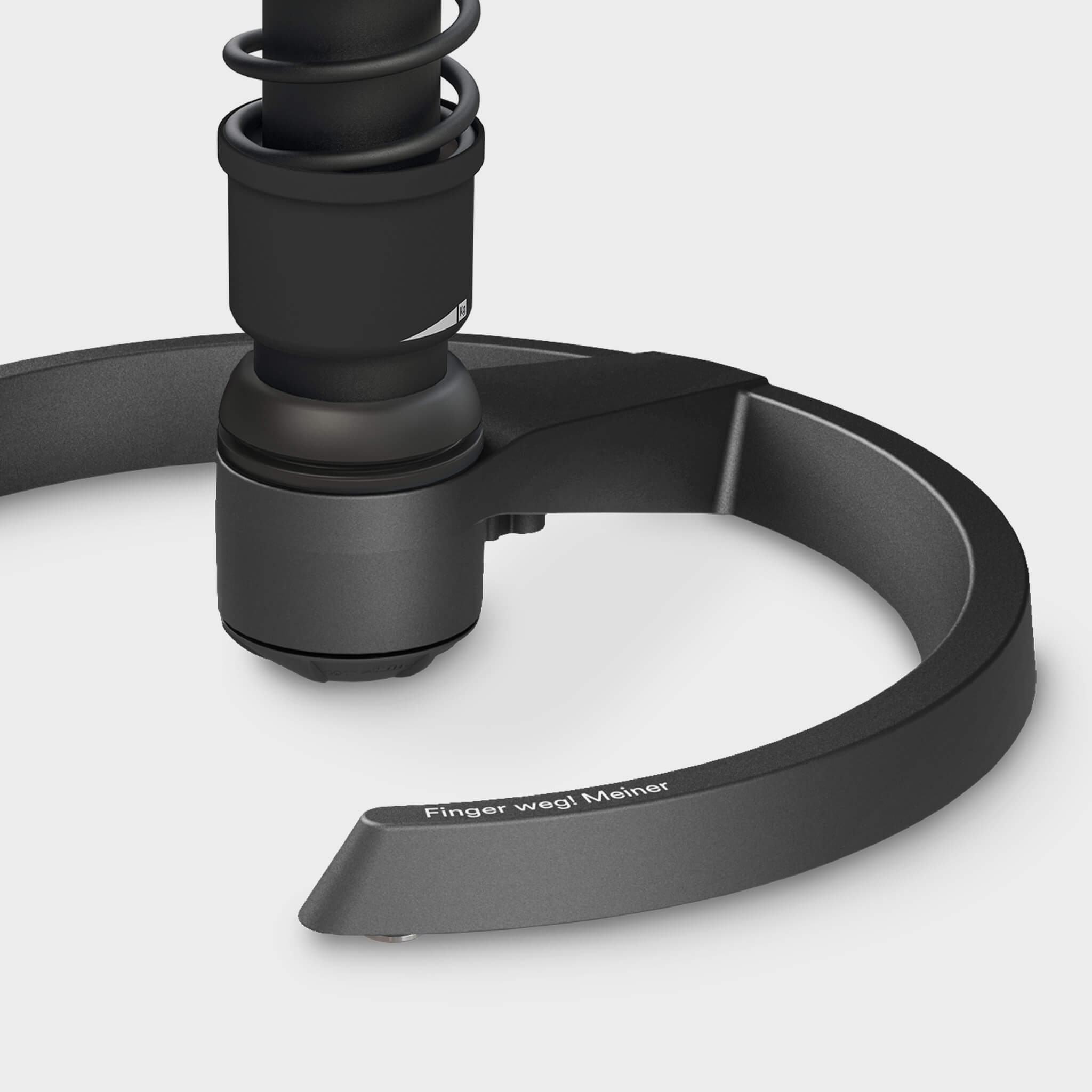
Aeris' active seating encourages and promotes intuitive, natural movement. The Aeris Swopper and Aeris 3Dee, for example, are three-dimensionally flexible and adapt to the body's natural movements at all times. This active, dynamic sitting keeps the joints constantly in motion. This strengthens ligaments and tendons, prevents joint wear and tear, and automatically improves your health.